
Understand Cass County Property Value
A Cass County property value is really several numbers wearing one label. The assessment record alone may list land, building, improvement, assessed, and taxable figures. A deed or parcel record can show what a past sale actually brought. Start with an address or parcel number and note the year and the value label. Then set that figure beside the recorded transfer. Match the labels before matching the amounts. To search Cass County property records by address is the quickest first step. The value you find always deserves a second look.
| Value type | Meaning in the record | Where it appears |
|---|---|---|
| Assessed value | Michigan assessment figure set at 50 percent of true cash value | Assessment roll and BS&A |
| True cash value | The state's full-value concept for assessment law | Assessment and equalization context |
| Taxable value | The separately capped figure used in the tax calculation | Assessment and tax record |
| Last sale amount | Consideration tied to a past transfer | Parcel fields and recorded deed |
| Land, building, improvement | Components used to describe the parcel's record value | Public parcel service fields |
Property value and sale price can disagree without any error on record. The two figures serve different purposes, follow different rules, and often carry different dates. Compare matching fields from the same year before concluding anything.
Look Up Cass County Assessed Value
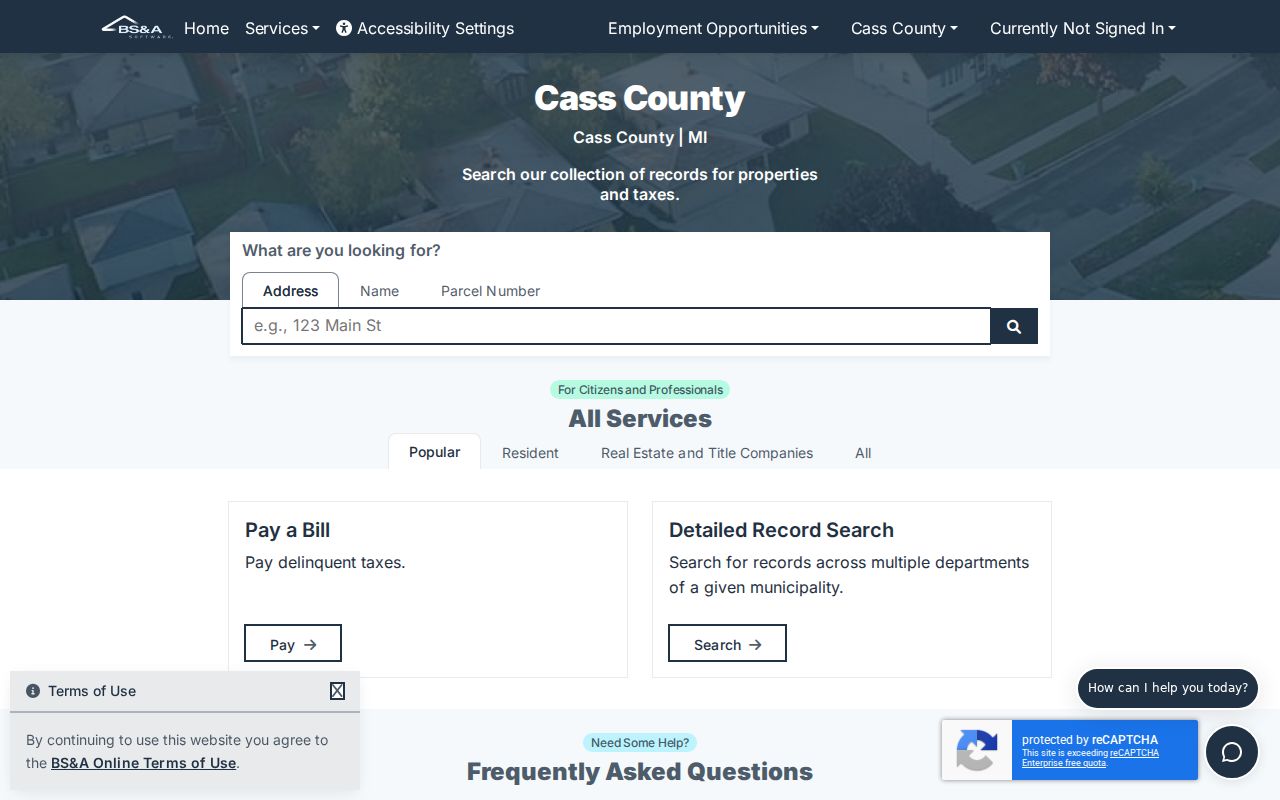
For current tax and assessing access, the county points to BS&A Online Cass County. Look up a parcel by address, name, or parcel number. A public search costs $6, the county says. Owners with an account can reach their own information without paying that charge.
- Search the street address in BS&A and confirm the situs, parcel number, and correct local tax unit.
- Record each displayed value label, amount, and assessment year. Do not treat assessed and taxable value as synonyms.
- Check sale date, sale amount, and deed book/page in the parcel data, then verify the deed when the transfer matters.
- Compare the figure with the county equalization cycle and any transfer that may affect taxable value in the next calendar year.
- Assessed value
- One-half of true cash value under Michigan's assessment level.
- True cash value
- The state's statutory full-value concept, commonly discussed as market value in assessment materials.
- Taxable value
- The separately limited amount used as part of the property tax calculation.
- Assessment ratio
- The relationship between assessed value and true cash value.
- Sale consideration
- The amount reported for a transfer, which may need the deed for context.
- Reassessment
- The process of reviewing and setting assessment values for a new roll.
Cass County Property Value Fields
The public ArcGIS parcel schema carries PropertyValue alongside LandValue, BuildingValue, ImprovementValue, and agricultural-land value. The record also holds sale date and amount. Deed book and page appear there too, along with parcel class, legal description, acreage, taxing district, school district, year built, and floor area. Treat these as record fields, not a finished appraisal. When the BS&A result is blocked, or the labels need checking, the Cass County parcel service is a useful backup.
The assessment interface remains the official starting route. The field inventory simply clarifies which kinds of value can attach to a parcel.
Cass County Sale Amount Differences
A sale amount is evidence of one transaction, nothing more. Timing, condition, bundled interests, and family or estate circumstances can all shape it. A bare number reveals none of that. The parcel service lists SaleDate and SaleAmount as leads, with DeedBook and DeedPage pointing onward. Follow those references into the Register's recorded instrument. The deed names the parties, the date, the legal description, and the form of transfer. Even a fully documented sale, though, does not establish today's property value; treat it as one dated comparison point rather than a substitute for a market analysis.
Cass County's May-April Value Cycle
The Cass County equalization process follows an annual May-to-April cycle. Local assessors set their rolls in January and February. Assessment-change notices go out in February. Local Boards of Review act in March. The county report is then finalized in April or May. County Equalization audits assessment levels and processes deeds and recorded documents within that same cycle. This schedule is why every Cass County property value deserves a date beside it. A sale recorded after one stage may not reach the same roll immediately. No fixed closing-to-update lag applies. So assume no exact number of days.
Note: Compare the assessment year, recording date, and transfer year before treating two different figures as a records error.
Transfers Can Change Taxable Value
Michigan caps taxable value separately from assessed value. A transfer of ownership removes that cap under state rules. The change can take effect in the calendar year after the transfer. A new buyer may therefore see a changed taxable figure. That figure no longer follows the prior owner of record's capped path. That jump is a tax-roll effect. It is not proof the parcel's market worth rose by the same amount. Keep assessed value, taxable value, and sale amount in separate columns when comparing years. The Cass County property tax records page covers bills, exemptions, and appeals in more detail.
Local Assessors Set Cass County Values
No single Cass County assessor maintains every local parcel card. The correct office depends on the tax unit. The county roster lists separate assessors for Dowagiac, Howard, Jefferson, Marcellus, Newberg, LaGrange, Pokagon, Wayne, Mason, Porter, Volinia, Milton, Ontwa, Penn, Silver Creek, and the City of Niles unit. Confirm the tax unit from the parcel itself. A mailing city can cross city, village, township, and even county lines. So postal names mislead. The local assessor explains the tax roll entry. County Equalization handles countywide studies and the annual process.
Cass County Property Value Limits
An assessment exists for property-tax administration. It does not certify condition, confirm a boundary, inspect a building, or promise a sale price. The public parcel schema includes year built, floor area, style, condition, and quality fields. Those record labels are not a physical inspection report. For a purchase or sale decision, weigh recent relevant transfers, the property's legal and physical facts, and a qualified appraisal when needed. Never call a tax-card value an appraisal. Never call one recorded sale the market.
Value is not price. A Cass County assessed value serves taxation and does not state what a property would sell for today.